
Free Resources
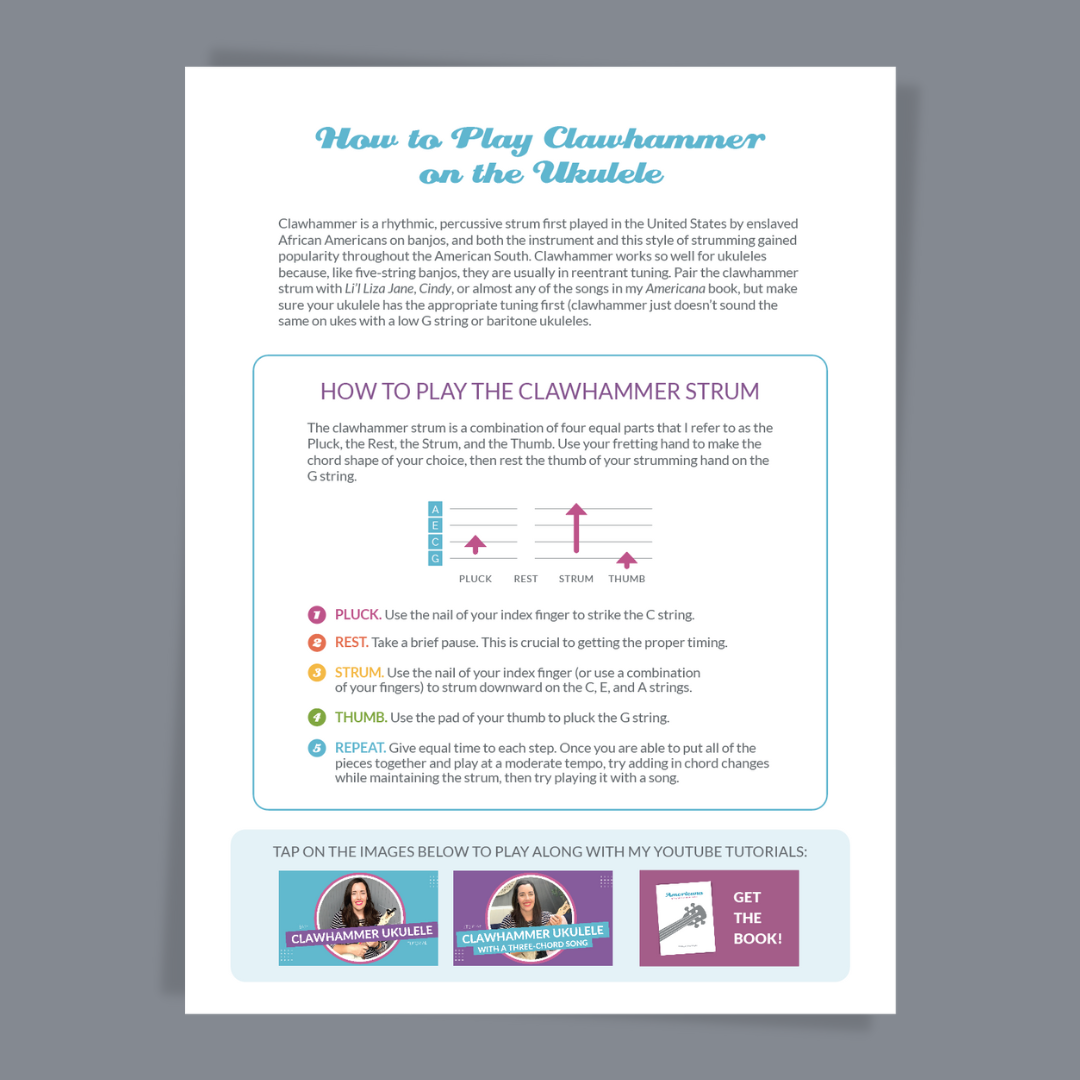
A one-page how-to for clawhammer strumming on the ukulele. Includes a brief bio on the strum, useful diagram that breaks down each step of the strum, and links to video tutorials to get you hammering right away!

In this interactive PDF, I've put together a one-page how-to for strumming your ukulele. Includes details on how to shape your hand, how to read a strum pattern diagram, and links to several short, helpful video tutorials to get you strumming right away!
Once you’ve figured out the basics, check out my Strum Patterns Chart and Strumming videos for more!
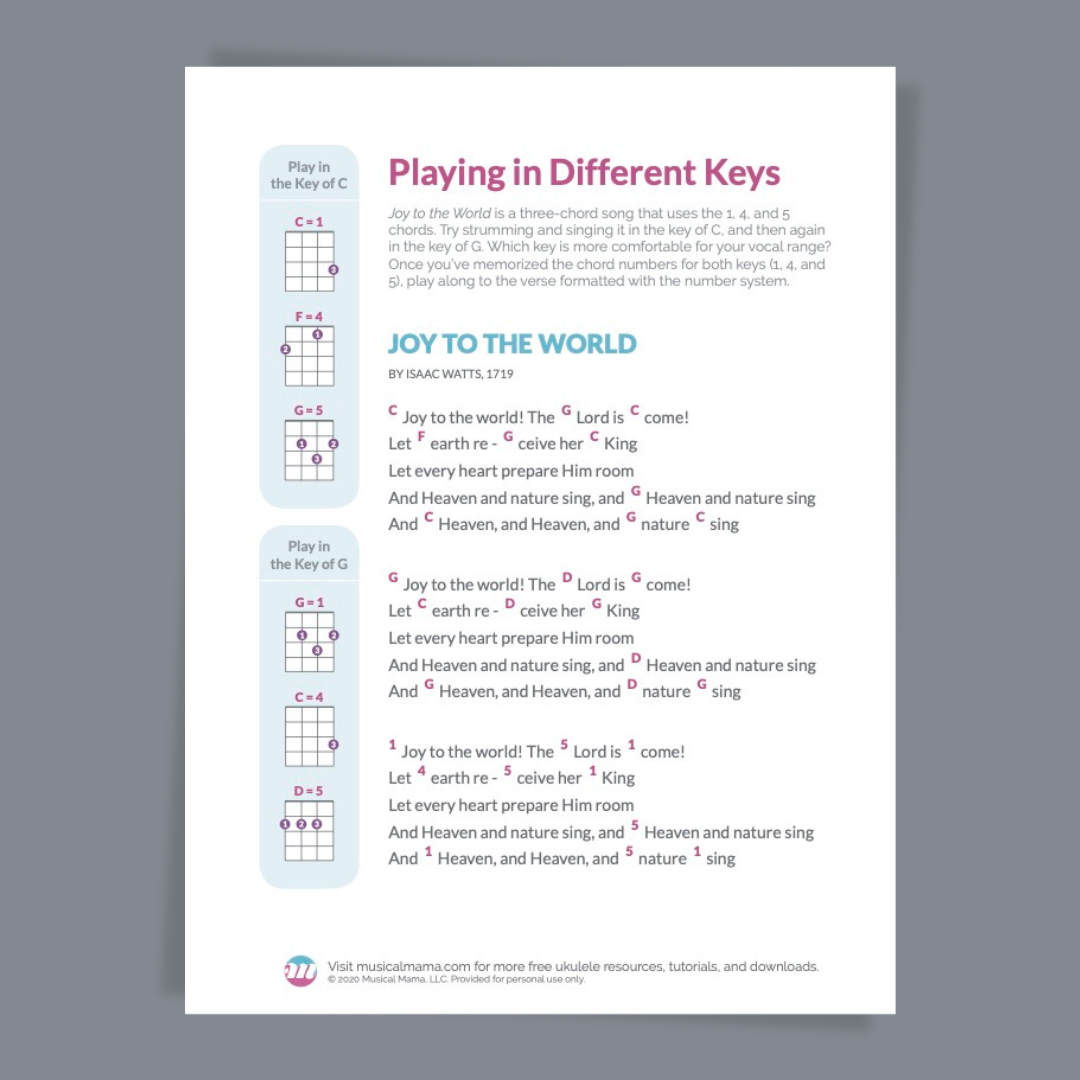
Christmas music is, essentially, a type of folk music. Each year we hear many of the same songs, and we often have our own favorite versions of those songs. And of course, new versions of those classic carols and pop songs get recorded every year. Today I'm sharing a song that was written three hundred years ago—it’s sung by artists and choirs around the world, and it’s one you may already know by heart.
I love sharing the Nashville Number System because learning how to use it has been crucial in my understanding of music. Once I understood that there were patterns behind the chords I was playing, I quickly learned how to change the key of song to better suit my (very average) vocal range, started feeling chord changes more naturally, and was even able to start figuring out the chord progressions to songs on my own. This PDF for Joy to the World and the play-along video are designed to ease you into using the number system so that you can experience the same breakthrough that I had. Play along with me as I use the number system to strum and sing the song’s first verse in the keys of C and G. Which key is a better fit for your vocal range?
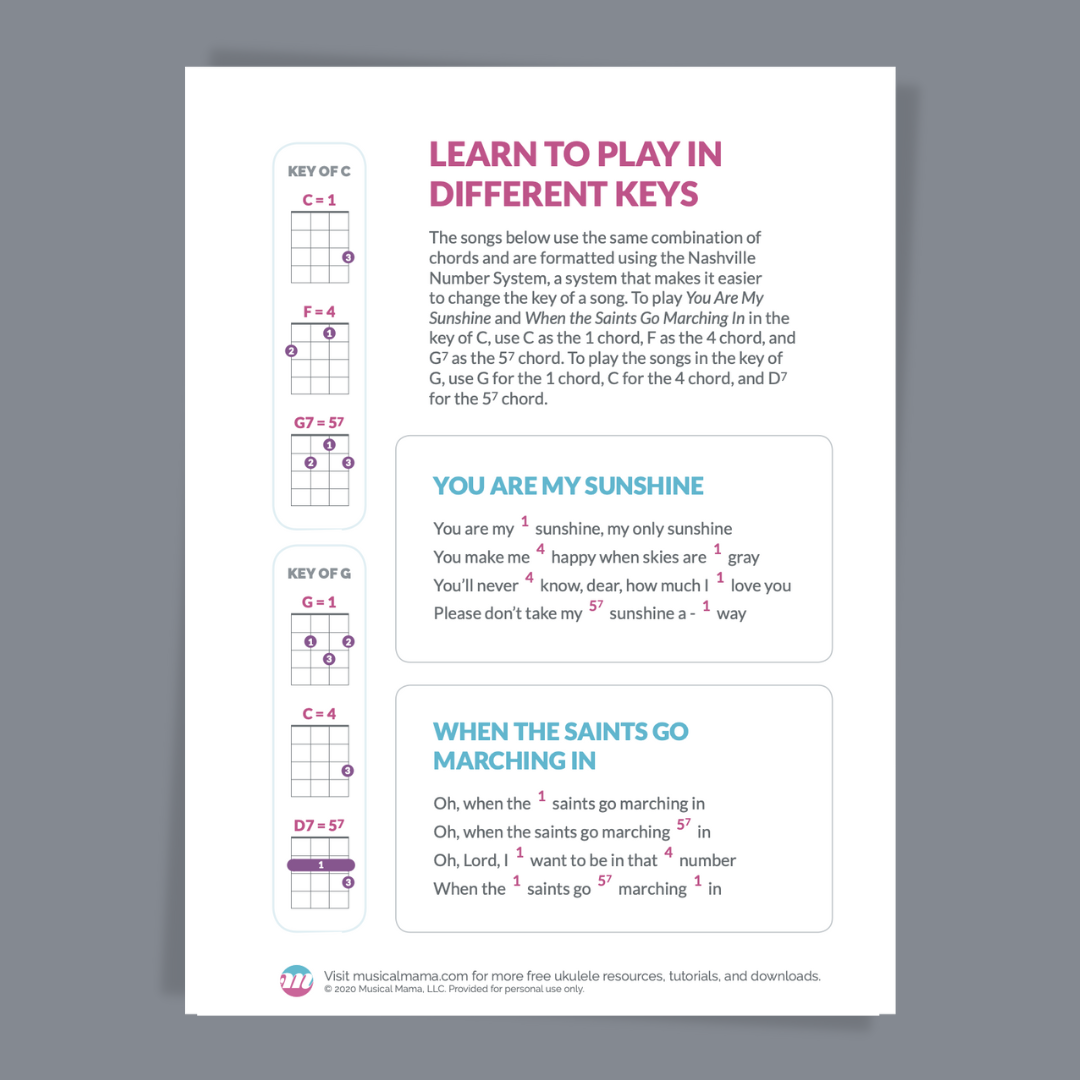
I’ve heard too many people state matter-of-factly that they can’t sing, but that’s simply not true. The trick is to know which keys are a good fit for your vocal range so that you can sound good singing while you strum! With this video, you will learn how to use the Ukulele Chord Chart Using the Nashville Number System to easily change the key of a song. Strum along with me as I play two familiar songs in different keys so you can get the hang of transposing (changing the key of a song) and start to figure out which keys are a more natural fit for your voice.
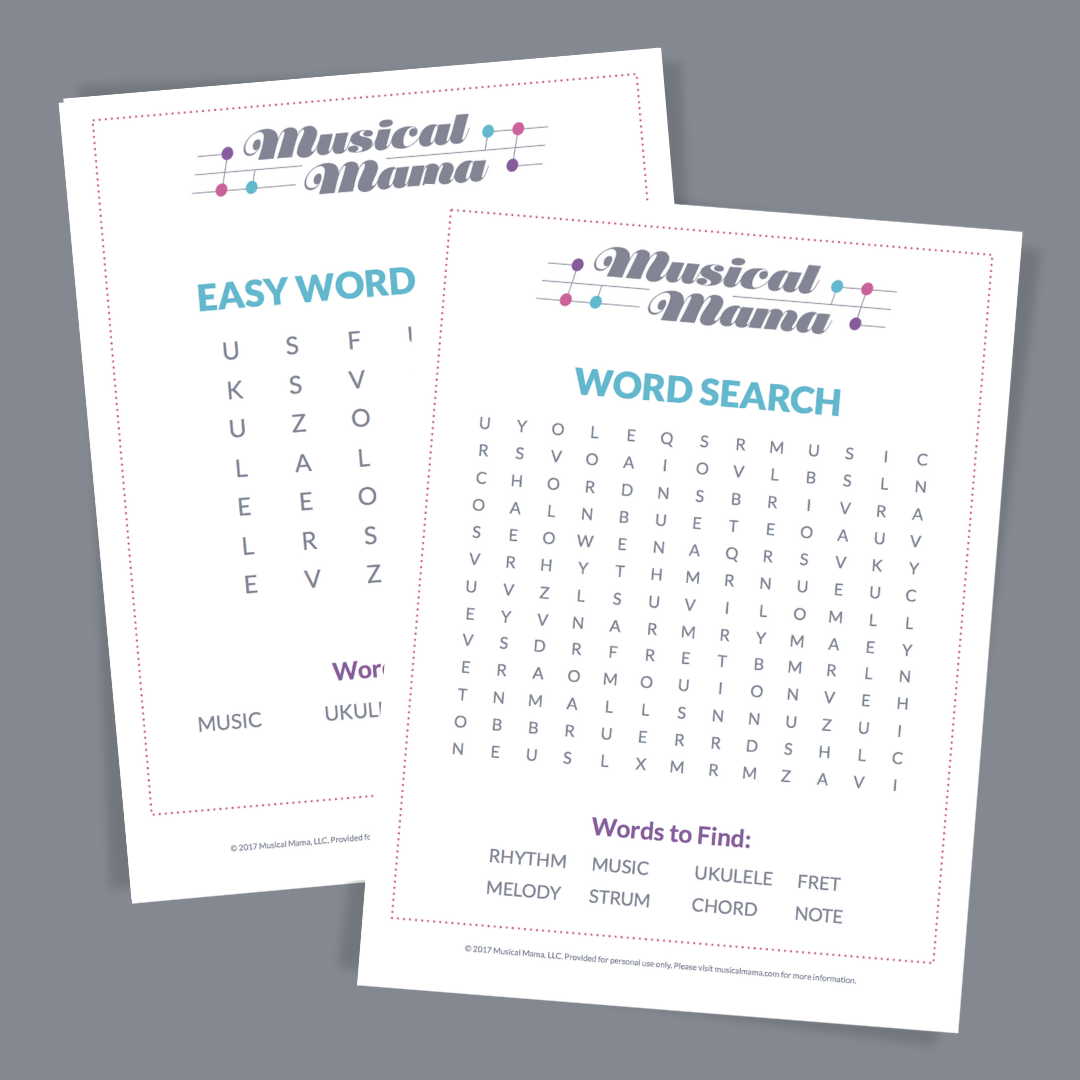
Do your kids love activity pages? Word searches were a big hit with my kids when they were younger, and I thought it would be fun to create a music-themed word puzzle to share I've created two versions: a simplified version for early readers and a more challenging version for school-aged children. Bonus points go to the grown-ups who play their ukuleles while their kids work on the word search!
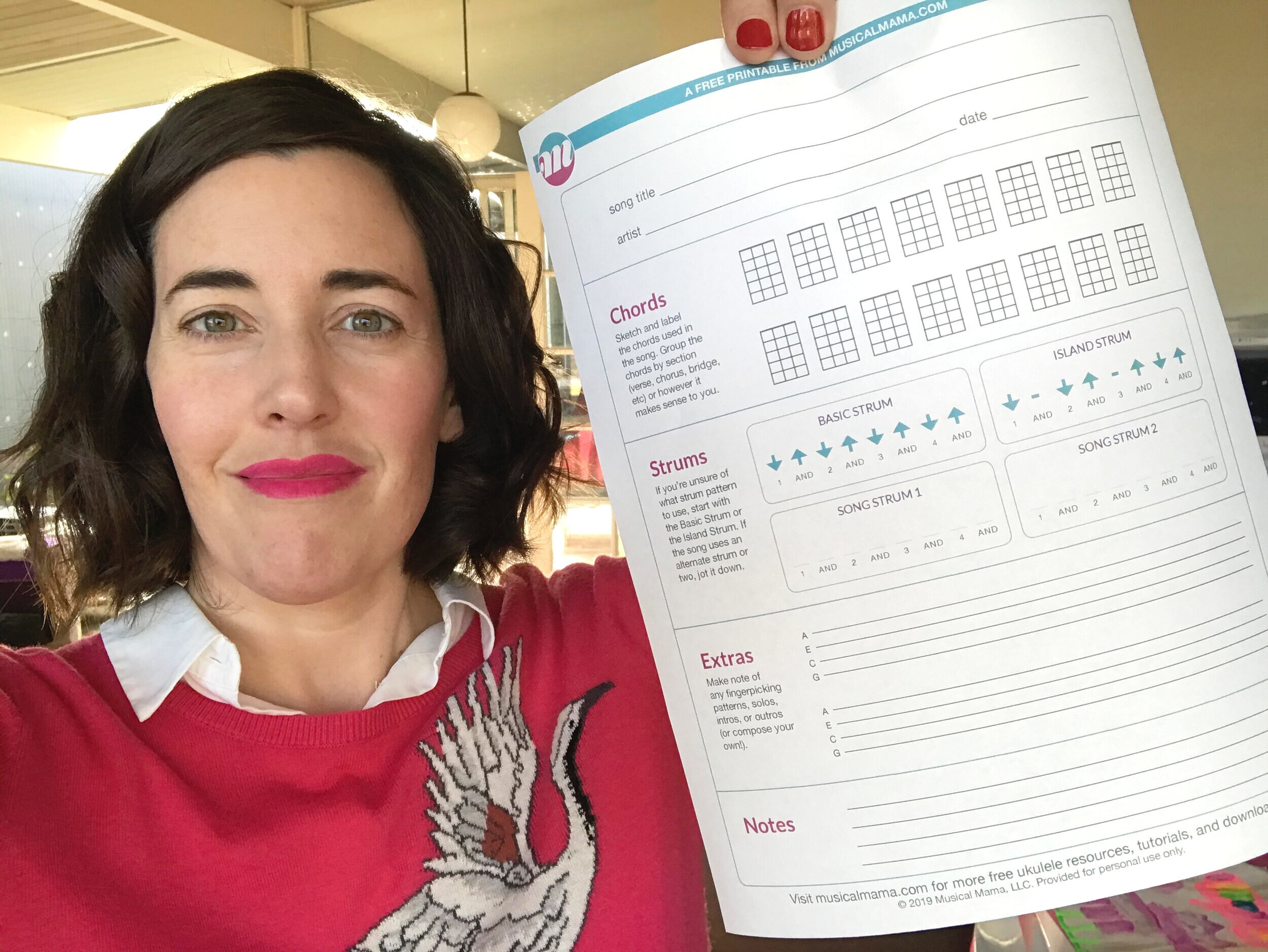
This free printable can help you formulate a plan of action for any new song you’re trying to learn, as most songs can be tackled by going through the same five steps. Let’s walk through each one:
STEP 1: LISTEN
Before you can learn to play a song, you need to know what it really sounds like! Often times we think we’re really familiar with a song but in actuality maybe we only remember the intro and/or the first verse and chorus. Listen and sing along with the recording until you’re really comfortable with the melody, the rhythm, and the arc of the song. Other things to pay attention to: tempo, lyrics, and mood.
STEP 2: CHORDS
Once you’re familiar with the song, jot down all of the chords on the free printable. Organize them by section (verse, chorus, bridge, etc) or however it makes sense to you. Practice playing the chords on their own, then practice making the chord transitions until you can do it smoothly.
STEP 3: STRUM
I’ve included strum diagrams for the basic down/up and island strums, and if your song uses an alternate strum pattern or two, you can jot it down here. Practice the strum on its own first, then practice pairing it with the chord changes in the song. Repeat until you’re able to play smoothly.
STEP 4: EXTRAS
Jot down any additional pieces of the song like an intro, outro, solo, or fingerpicking pattern, in the Extras and Notes section. As you practice, consider making an audio recording of your playing. It’s a great way to track your progress!
STEP 5: PLAY OFTEN
It’s easy to underestimate the time investment required to really master a new song or skill, but there’s only way to really master a song— through repetition. So take your time and enjoy the process the best you can. And, if you’re so inclined, make a recording of yourself and document your progress!
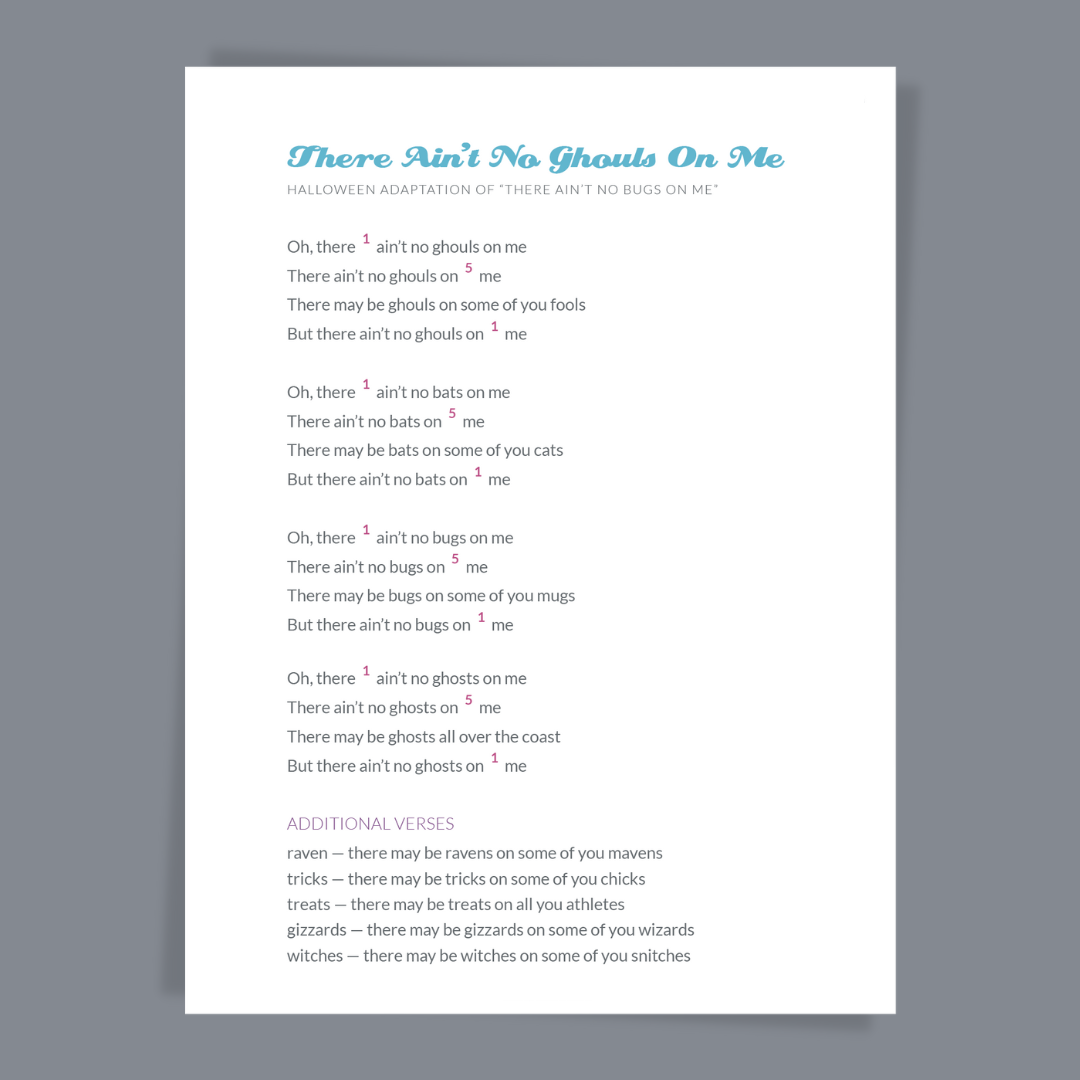
On of my favorite songs in Let's Play! is There Ain't No Bugs on Me. For my latest free printable, I've given the lyrics a Halloween twist and renamed it There Ain't No Ghouls on Me. Can you come up with your own spooky verses? (If you're new to this melody, you can check out the play-along video for Bugs here).
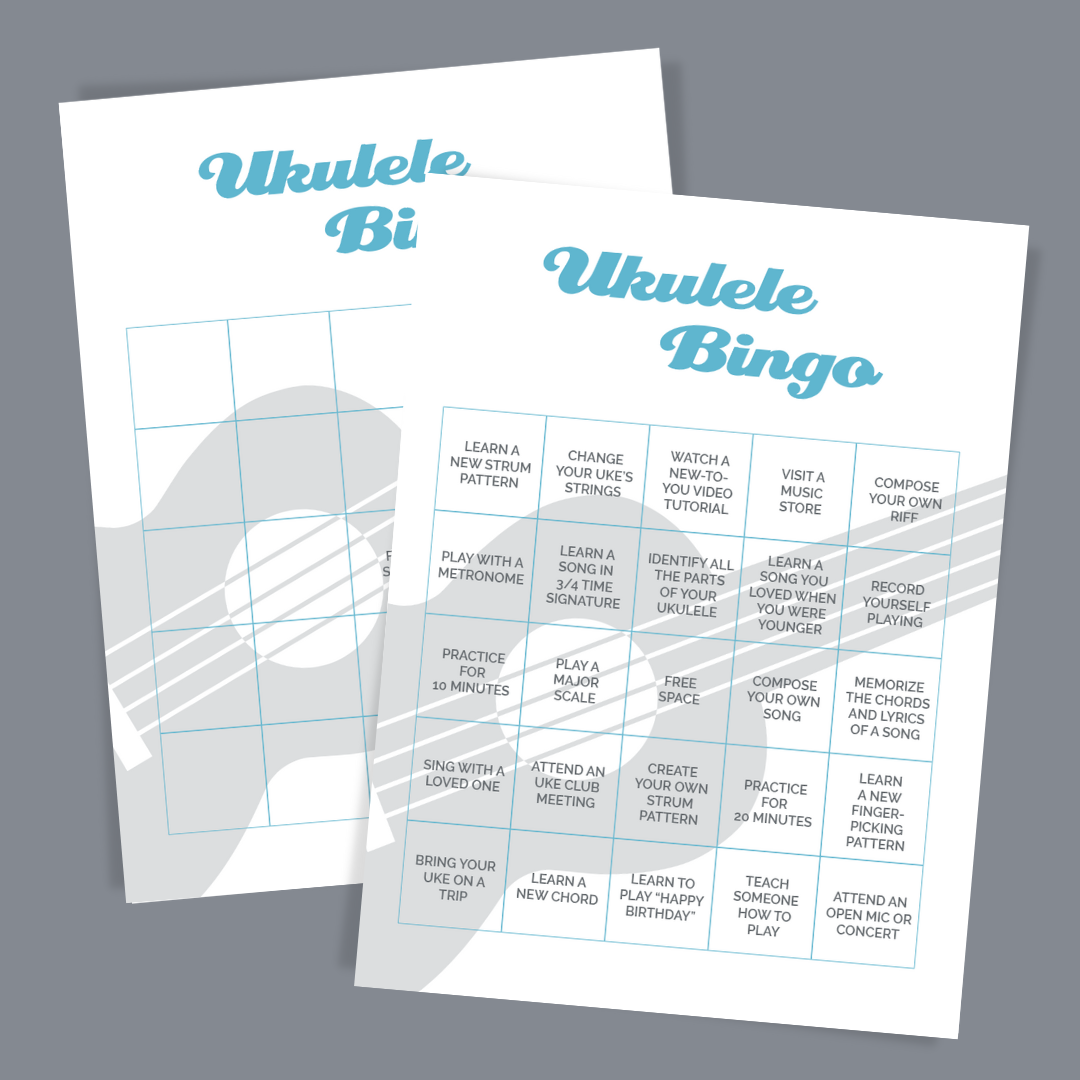
Gamify your music-making with Ukulele Bingo Cards! Use the pre-filled page to inspire your ukulele practice, or use the blank sheet to create your own bingo card!
Selections include:
Learn a song you loved when you were younger
Visit a music store
Record yourself playing
Learn a new fingerpicking pattern
And much more
Check out this blog post with resources to help you check off your bingo card!

This free PDF includes two different ukulele-themed coloring pages:
Ukulele with psychedelic background
Dinosaur chilling with an ukulele
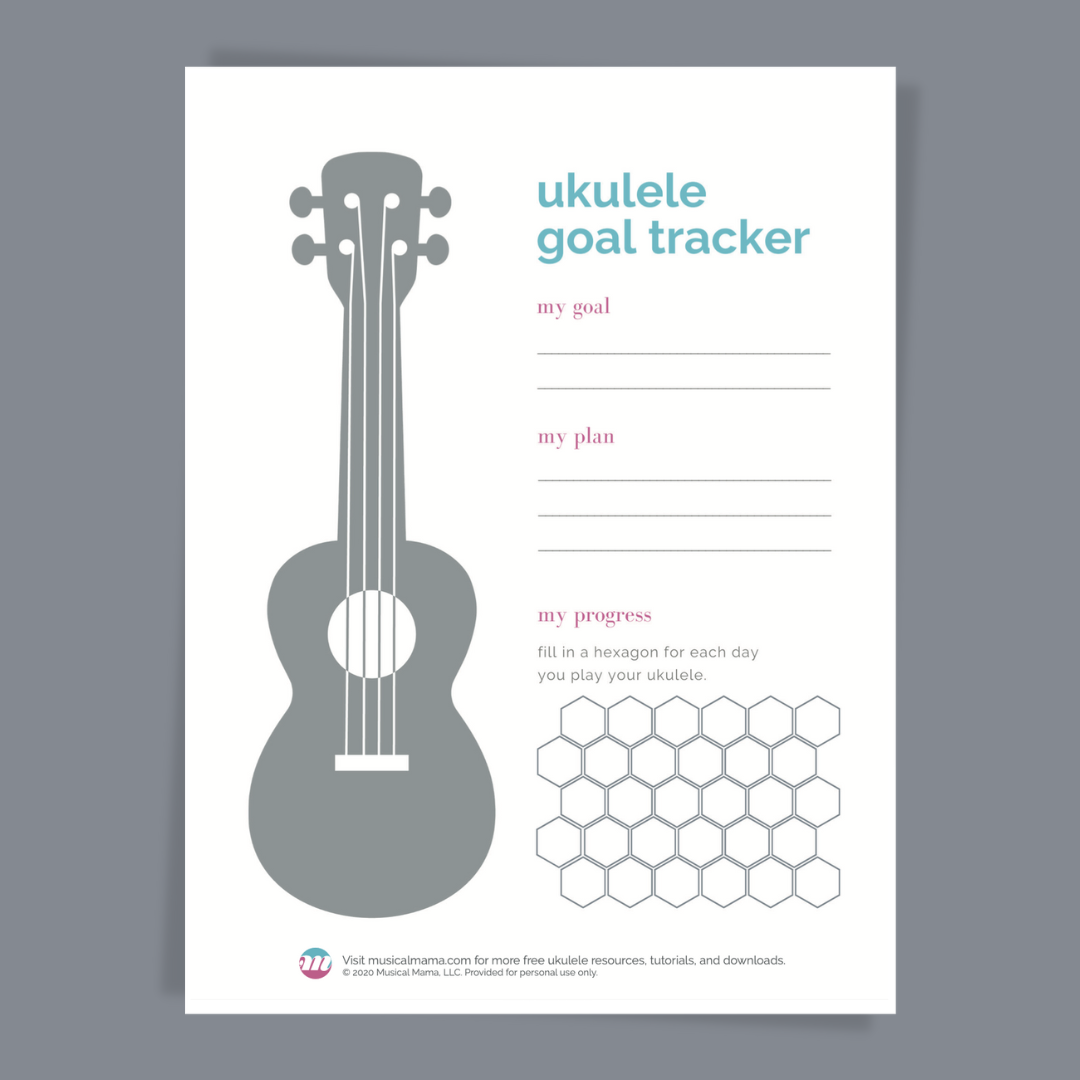
STEP ONE: SET A (VERY SPECIFIC) GOAL
Rather than vaguely stating that you want to "learn to play the ukulele" or "get better," be specific. Perhaps you'd like to learn to play a particular song by heart or to smoothly make chord changes from C to G7 (if you've been playing a little longer, perhaps your goal could be to make a smooth transition between two trickier chords or to learn a new strum or fingerpicking pattern).
STEP TWO: ASSESS WHERE YOU ARE
You know those mall directories with the "You Are Here" stickers? Before you can reach your destination you need to identify your current location. Where are you in relation to your goal? How will you get there?
STEP THREE: MAKE A PLAN
How can you break your goal down into baby steps? How will you track your progress? If your goal was to make a smooth chord change from C to G7, you'd probably make a plan that looked something like this:
Play each chord on its own until you've memorized the chord shapes and can consistently get a nice clear tone from all strings
Have your left hand move from one chord shape to the other, slowly, strumming once per chord
Practice the chord changes while gradually increasing your strumming tempo
And so on...
STEP FOUR: EXECUTE
Make your plan as actionable as possible. When and where will you play? What can you do to make it easier for you to follow through? Would you benefit from taking a lesson or joining a meet-up group? Will you play at night before bed or during the afternoon? Dedicating just a few minutes a day (or most days) can go a long way toward helping you achieve your goal.
STEP FIVE: CELEBRATE
Once you've accomplished your goal, don't forget to celebrate! It's so easy to want to move on to the next skill/technique/song, but it's important to do a little reflecting from time to time and remember all that you have accomplished.
REMEMBER, IT'S AN UKULELE PRACTICE
As I wrote in a blog post,
From time to time I'll refer to playing the ukulele as an ukulele practice, a concept inspired by the idea of a yoga practice. A yoga practice emphasizes the understanding of one’s self in relation to the activity of yoga, whereas doing yoga is the act of going through a series of poses. When I practice yoga, there’s a natural variance in my abilities. Some days I have better balance or stamina, some days I’m more fatigued and stiff. That’s natural and normal, and I experience the same type of fluctuations with my uke practice. Some days my fingers are less agile, some days my playing and singing are a little smoother than others. Thinking about your playing in terms of maintaining a practice can keep your focus on the more satisfying, bigger picture of making music a regular part of your life, while also leaving more room for being playful and patient with your day-to-day playing.
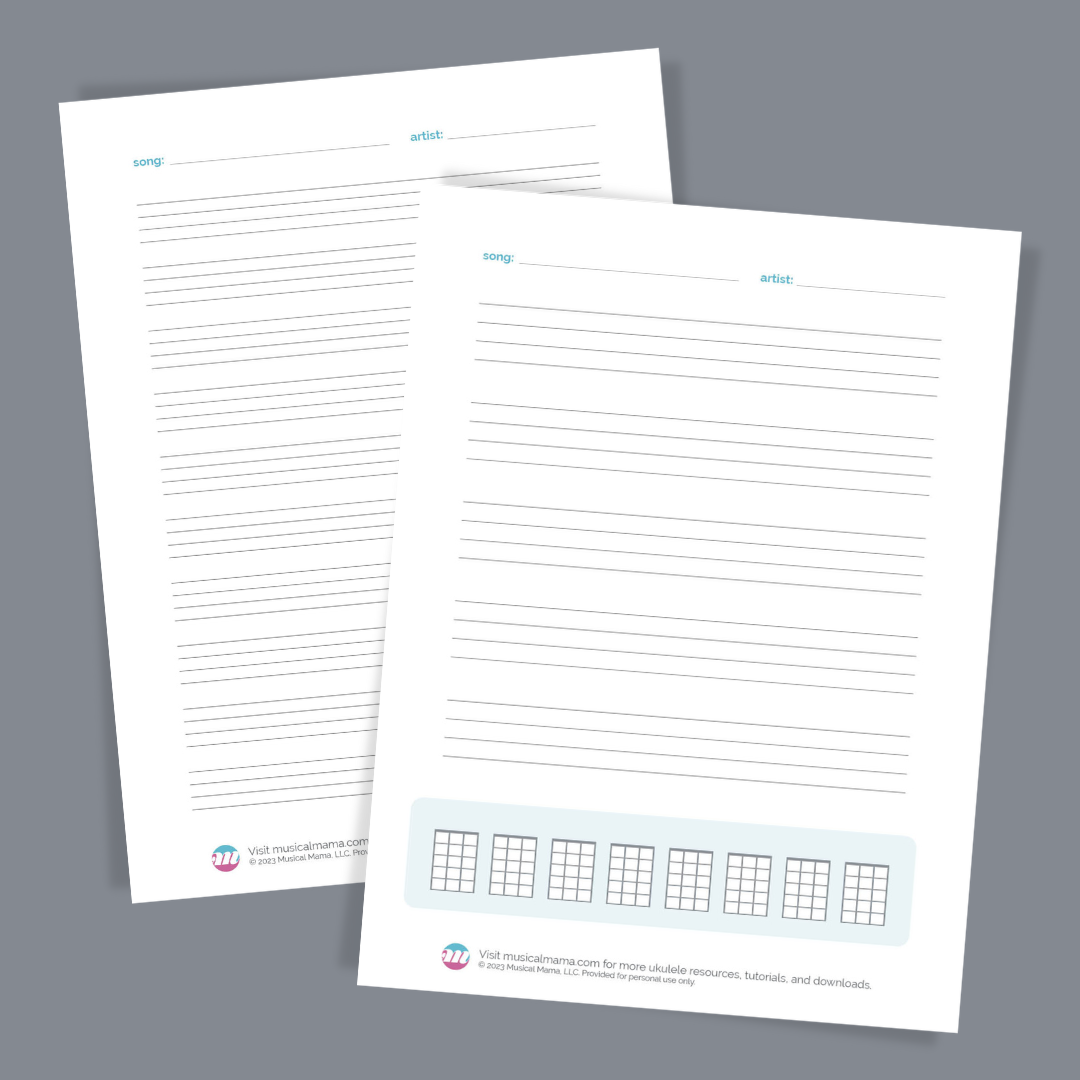
These Ukulele Tablature Sheets are my take on a music-making basic. Perfect for transposing melodies or creating your own riffs, this tab sheet file is a resource you can use over and over again! This free digital download is a two-page PDF. Page 1 features the additional option of chord diagrams, Page 2 is a more streamlined tab-only view.
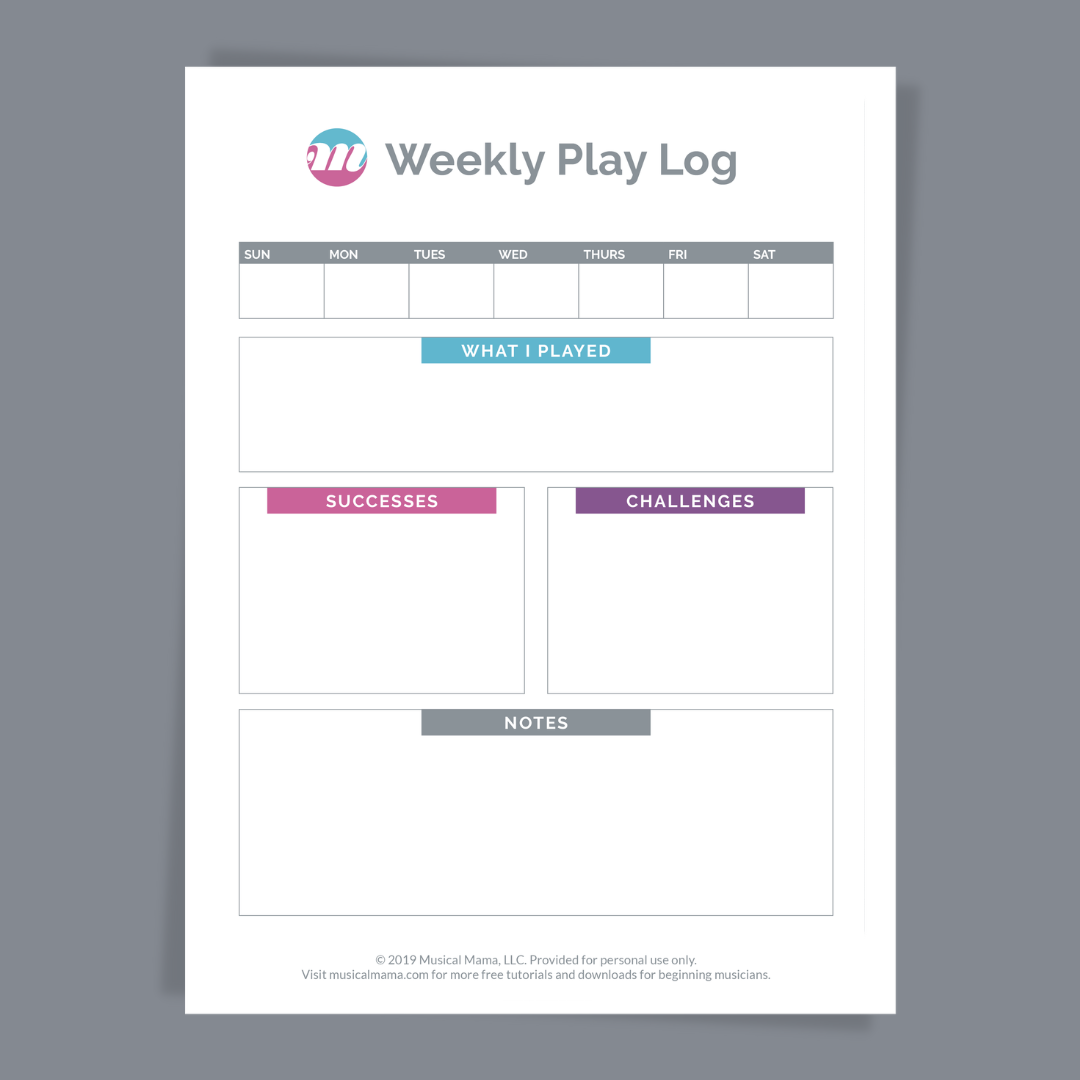
Even when I’m having a good run of playing my ukulele daily, I can feel a little disorganized. I was pondering this last night, then realized I would feel so much better if I was simply tracking my playing and making notes of what I was working on. It sounds incredibly obvious to me now, but it was a big a-ha moment at the time!
I used to maintain practice logs when I took piano lessons as a kid, but haven’t used one since. And since so many uke players are learning how to play on their own, I thought creating a weekly play log might be a helpful tool for me to share here on the blog. So here it is!
I hope this Weekly Play Log helps you:
Track the frequency of your playing (and potentially identify any trends or patterns to it)
Acknowledge the progress you’re making — it’s easy to focus on what we don’t know, and it’s so important to take time to reflect on our successes
Make note what’s feeling difficult or tricky at the moment
Clarify your goals so that you feel like you’re making the most of your playing
I formatted the Weekly Play Log with a wide left margin for my fellow three-ring binder lovers. This free download can be used by anyone learning to play any instrument, so please share it with your friends!
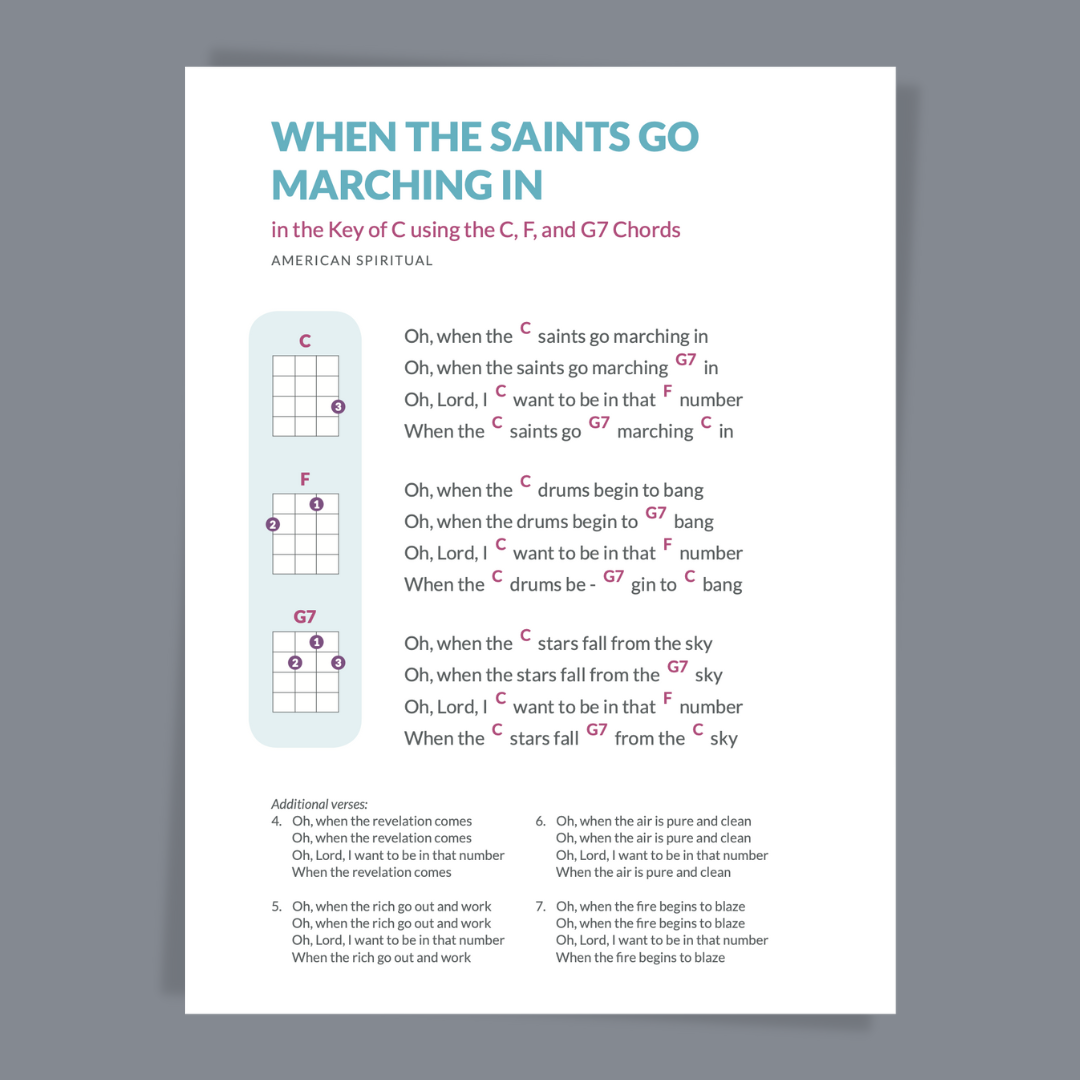
I love songs that are well-known and easy to learn, and When the Saints Go Marching In is both. I’ve set the song in the key of C using the C, F, and G7 chords—the first three chords most beginners start out with—which makes it incredibly approachable for new players.
The video is accompanied by chord diagrams and lyrics, and after the play-along section I provide some history on the song, discuss why it’s such a great option for players of all skill levels, and offer up a few different challenges for more seasoned players.
Happy holidays! To help you make merry, download this free MP3 of Jingle Bells. Listen to it on its own, or grab your uke so you can sing and strum along.
Set in the Key of C, using the C, D, F, G, and G7 chords
Designed to perfectly accompany the song as presented in Oh, What Fun! Christmas Songs for the Ukulele
Set at a reasonable tempo for strumming, not too fast or too slow
Instrumental. No vocals, unless you decide to add your own!
8 bar intro, to help you ease into the song
And of course, you can always sing and strum along with my Jingle Bells ukulele play-along, too.

Super simple rock beats for your next practice or jam session! More fun than a metronome, these basic drum beats are great for helping you develop your strumming endurance and your sense of timing. Download all four tracks, and play along with the ones you need right now.
File download is a ZIP file containing all four audio tracks.
All four tracks also available on YouTube:
60 bpm: https://youtu.be/Jj3QE1xDsTI
80 bpm: https://youtu.be/eUFzKxnZWHE
100 bpm: https://youtu.be/4iBdatcrYP0
120 bpm: https://youtu.be/v9qB8cMRB08
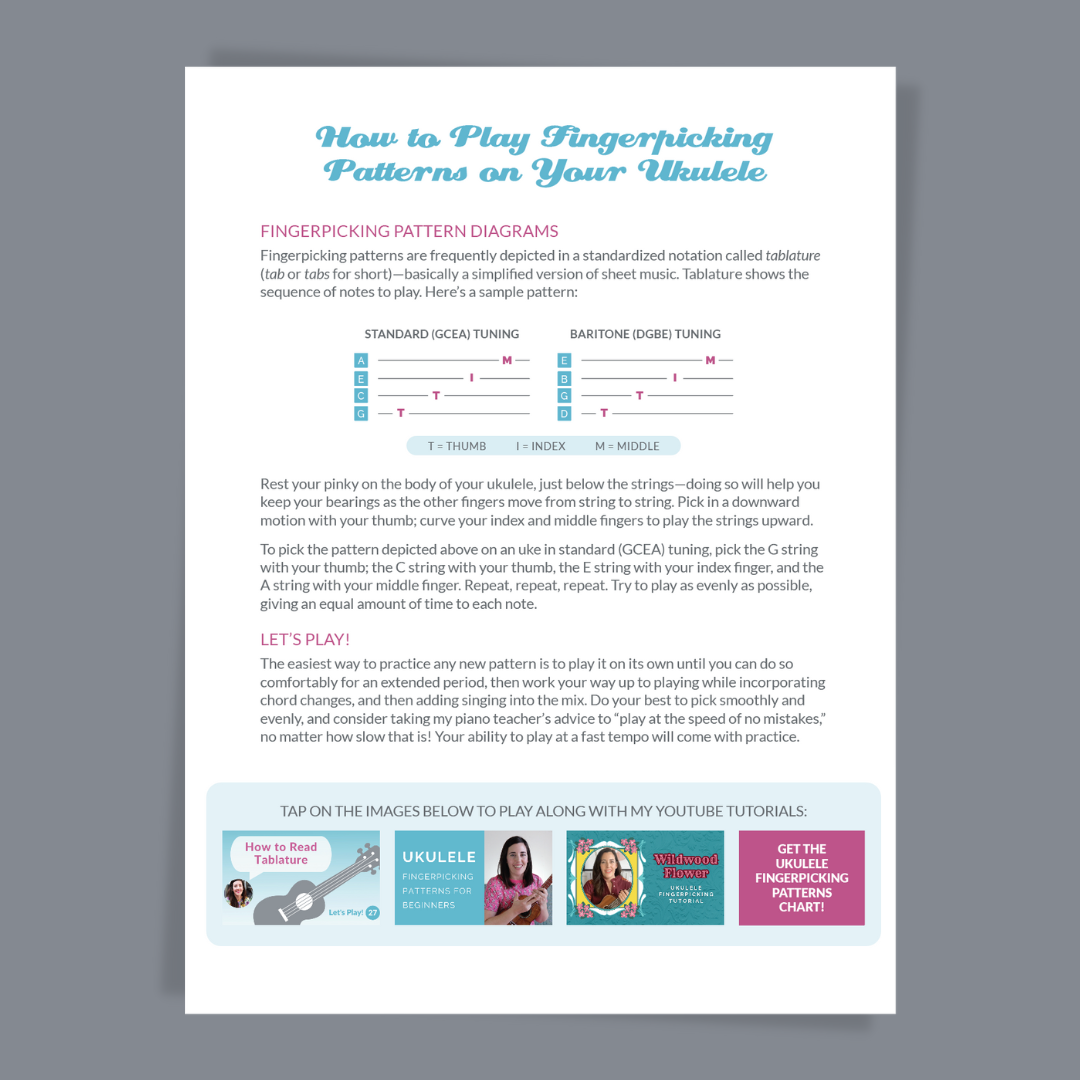
In this interactive PDF, I've put together a one-page how-to for fingerpicking. Includes details on how to shape your hand, how to read a strum pattern diagram, and links to video tutorials to help you start picking right away!
Once you’ve figured out the basics, check out my Fingerpicking Patterns Chart and Fingerpicking Videos for more!
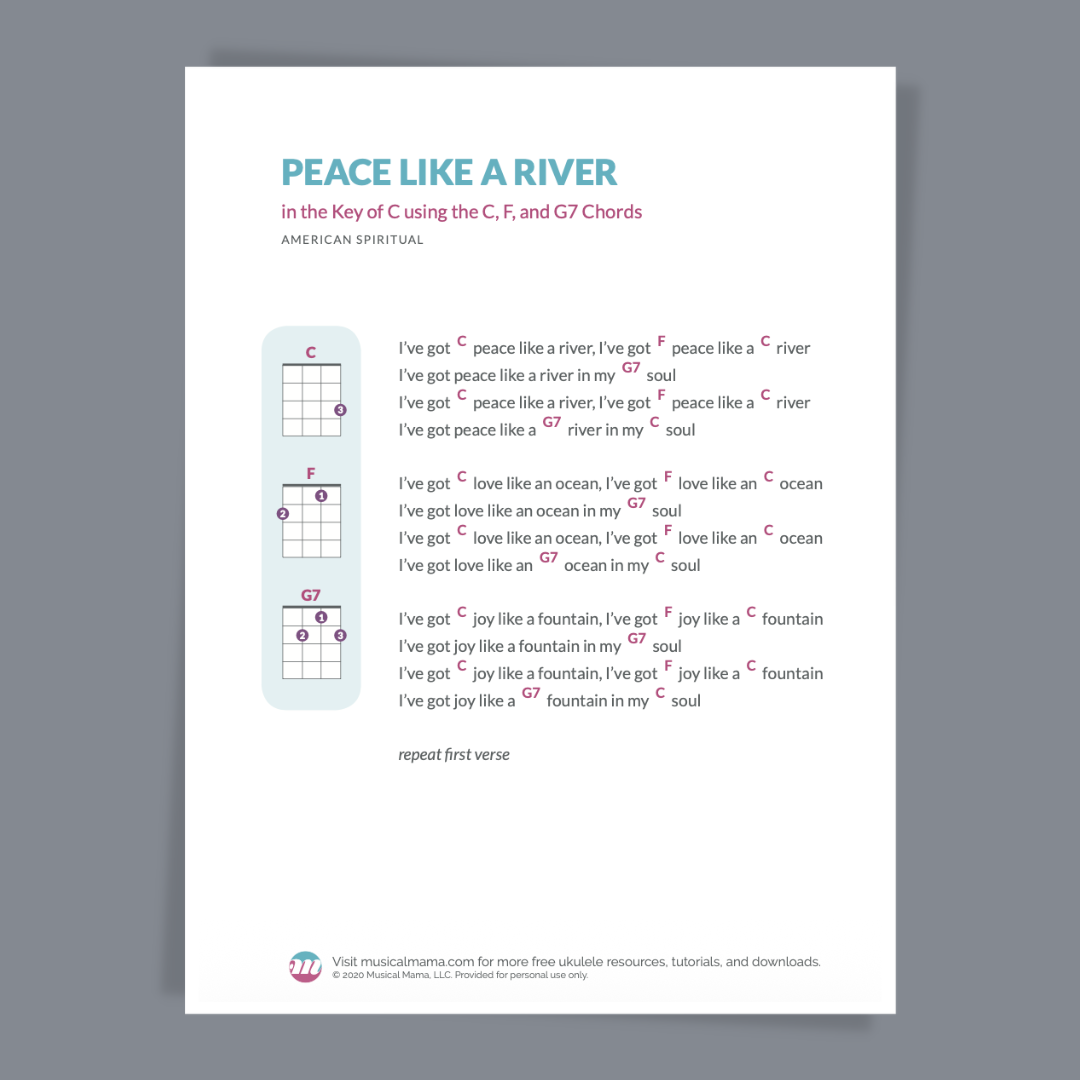
Here's a simple, powerful song that I sing to find comfort on hard days. Peace Like a River is a sweet song with very simple lyrics that make it easy to improvise your own verses. It uses the 1, 4, and 5 chords, and in the video I play it in the key of C (with a little "help" from my daughter).
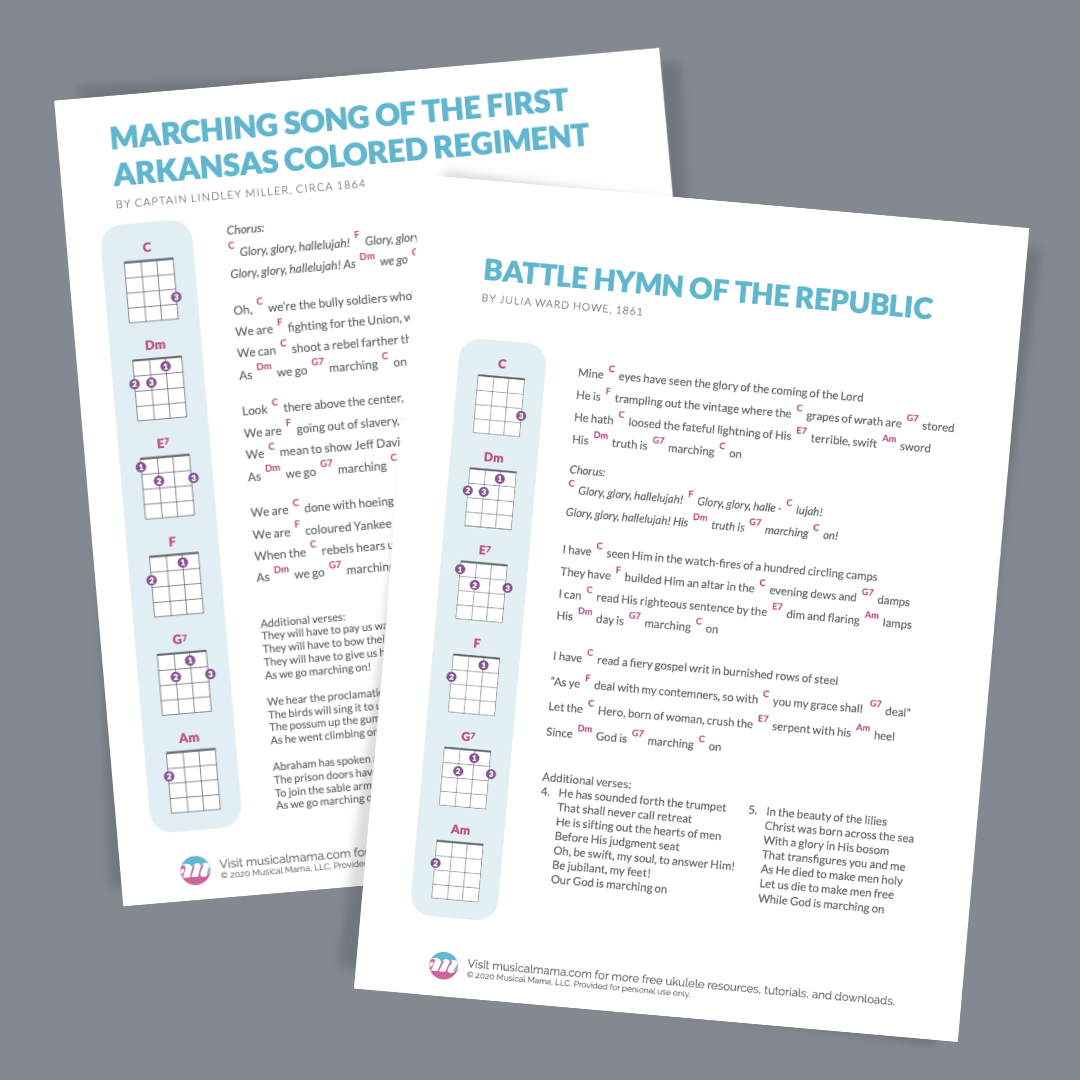
There is a tradition of folk songs being remixed and reinvented, and Battle Hymn of the Republic is a prime example of this. Julia Ward Howe wrote the song at the start of the Civil War after visiting with Union soldiers, but it is not an original song. The soldiers had composed their own marching song called John Brown’s Body, and Howe’s version is, essentially, a high-brow update to that song. In turn, Battle Hymn inspired subsequent adaptations, including Captain Lindley Miller’s The Marching Song of the First Arkansas Colored Regiment and Sojourner Truth’s Valiant Soldiers.
This PDF includes the chords and lyrics for both Battle Hymn of the Republic by Julia Ward Howe and The Marching Song of the First Arkansas Colored Regiment in the key of C using the C, Dm, E7, F, G7, and Am chords.
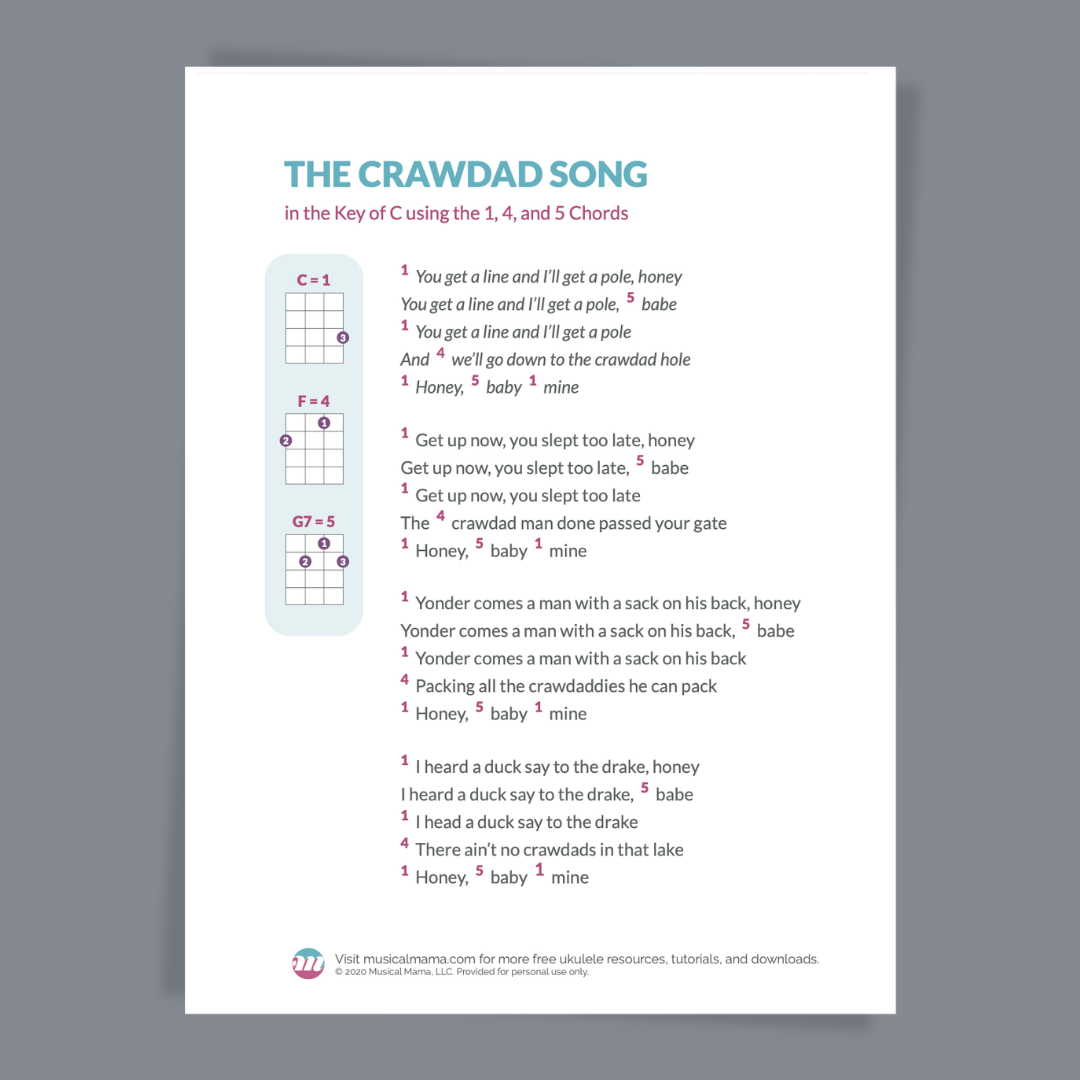
The Crawdad Song is an easy folk song that helps me channel the chilled-out, carefree vibe I want to last all summer long. In fact, I like this song so much that I included it in my book! For this play-along, I've paired it with the Island Strum and set it in the key of C using the C, F, and G7 chords. If you want to play it in other keys, this video from my April newsletter and my chord chart can help you do just that.
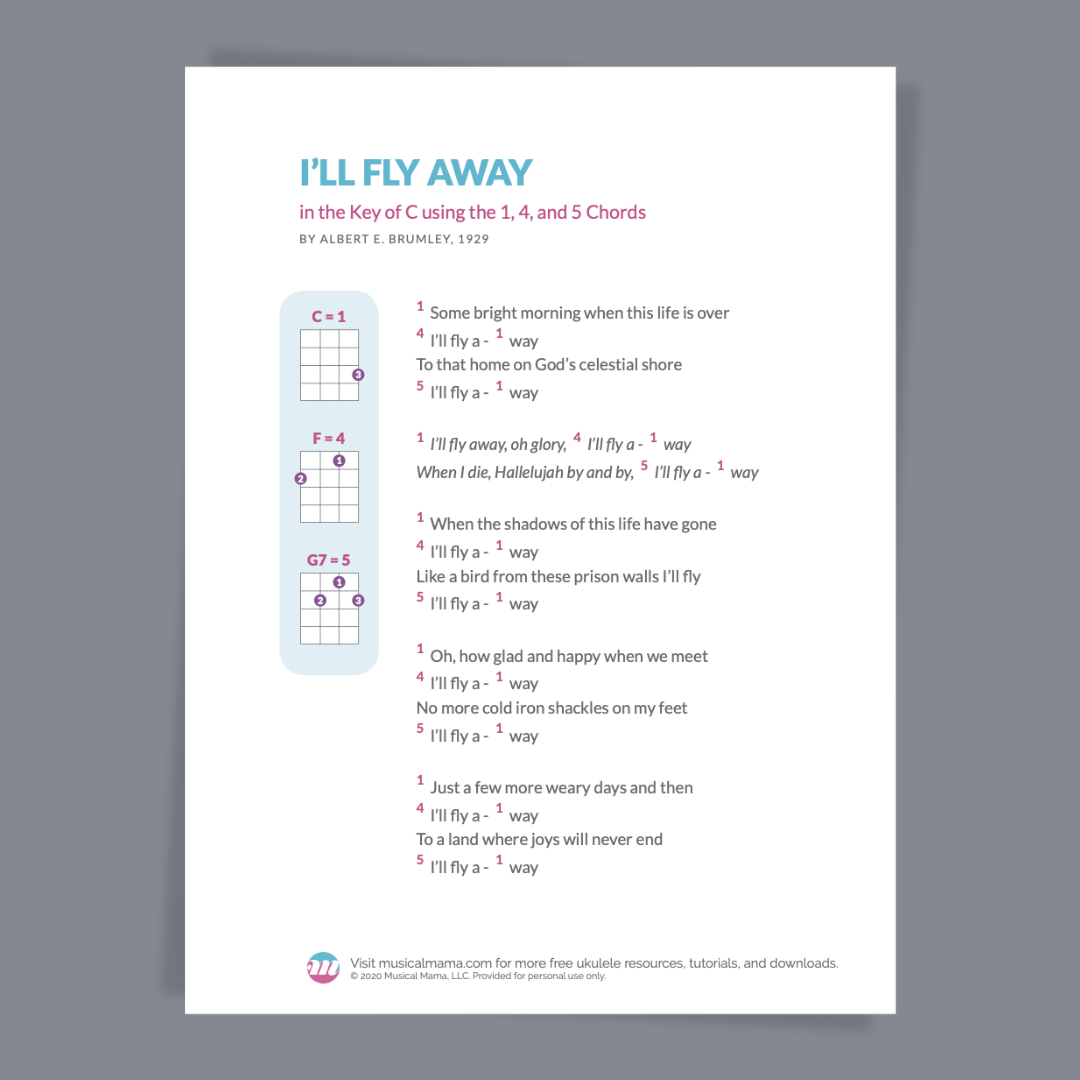
When we’re feeling overwhelmed, we can find comfort in strumming songs that have been played by generations of humans who have survived their own hardships. Spirituals in particular tend to help us cope with life when it feels like the sky is falling, and I'll Fly Away is an easy three-chord folk song that sparks my hope for the future.
I set this song in the key of C using only the C, F, and G7 chords, which makes it very approachable for even brand-new players. If you’d like to play it in other keys, this video from my April newsletter and my chord chart can help you do just that.
Any musician needs to know her/his instrument, so I've included two versions of a ukulele diagram. Page one is excerpted from Let's Play! The Ukulele Handbook for Beginners. Page two turns it into an activity page where you can put your memory to the test (I was inspired by my first grader's homework!).